India’s digital ecosystem is evolving at an unprecedented pace. With millions of users interacting daily across platforms—banking, healthcare, e-commerce, and social media—the importance of safeguarding personal data has never been greater. Recognizing this need, the government introduced the Digital Personal Data Protection Act, 2023 (DPDP Act), a comprehensive framework aimed at empowering individuals and regulating how organizations handle personal data.
Among its many forward-looking provisions, one stands out for its practicality and human-centric design: the right of a Data Principal to nominate a representative. This provision bridges a crucial gap in digital governance—what happens to your data rights if you are no longer able to exercise them?
Let’s explore this concept in depth.
Who is a Data Principal?
To fully understand the nomination right, we must first define the term Data Principal.
A Data Principal is:
Any individual whose personal data is being collected, stored, or processed.
This includes:
- Users of mobile apps
- Customers of banks
- Patients in hospitals
- Subscribers to online services
In essence, if your data exists in a digital system—you are a Data Principal.
The Right to Nominate: A Game-Changer
The DPDP Act introduces a unique and thoughtful provision:
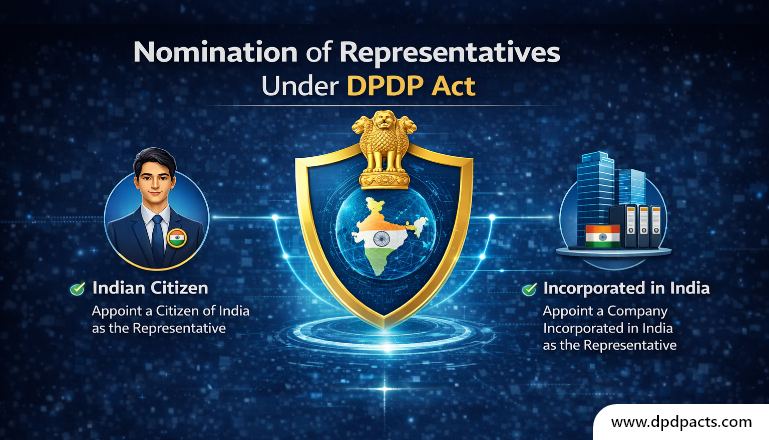
A Data Principal can nominate another individual to exercise their data rights on their behalf.
However, this is not an everyday delegation of authority. The nominee’s role becomes active only under specific circumstances:
When Does the Nominee Step In?
- Upon the death of the Data Principal
- In cases of incapacity, where the individual cannot exercise their rights
This ensures that the power is not misused while still offering a safety net for unforeseen situations.
Understanding “Incapacity” Under the Act
The term “incapacity” is intentionally broad to cover real-life situations. It may include:
- Mental health conditions affecting decision-making
- Physical disabilities that limit communication or access
- Medical emergencies leading to temporary or permanent inability
By including both mental and physical conditions, the law ensures inclusivity and adaptability.
Why This Provision Matters in the Digital Age
In earlier times, personal assets were mostly tangible—property, jewelry, documents. Today, digital assets and personal data are equally valuable.
Consider the following:
- Your email contains critical financial and personal information
- Your cloud storage holds years of memories and documents
- Your social media accounts represent your digital identity
Now imagine a situation where:
- Your family needs access to important data
- Or your data needs to be deleted for privacy reasons after your passing
Without a nominee, these processes can become legally and technically complex.
The nomination right acts as a digital continuity mechanism, ensuring your data rights live on when you cannot exercise them.
What Powers Does a Nominee Have?
A nominee essentially steps into the shoes of the Data Principal—but only within the boundaries of the law.
They can:
- Request access to personal data
- Seek correction of inaccurate or outdated data
- Request erasure (deletion) of data
- Withdraw previously given consent
However, nominees are not “owners” of the data. They are custodians of rights, acting in the best interest of the Data Principal.
Can You Nominate More Than One Person?
Yes, the DPDP Act provides flexibility in this regard.
You can:
- Nominate a single individual
- Appoint multiple nominees
This allows for more nuanced planning. For instance:
- One nominee for financial data
- Another for personal or social media accounts
However, this also introduces potential challenges, such as conflicting instructions between nominees—an area that may evolve through future rules or judicial interpretation.
Responsibilities of Data Fiduciaries
The DPDP Act places significant obligations on organizations that handle personal data, known as Data Fiduciaries.
They are required to:
- Provide clear and accessible mechanisms for nomination
- Enable users to nominate through:
- Account settings
- Online forms
- Ensure secure authentication of nominees
- Maintain records of nominations
This means companies must rethink their user interfaces and backend systems to incorporate nomination features seamlessly.
Special Provisions for Children and Persons with Disabilities
The Act also addresses scenarios where individuals may inherently need representation.
For Children:
- Parents or legal guardians automatically act on their behalf
For Persons with Disabilities:
- Lawful guardians can exercise rights if the individual is unable to do so
This ensures that the law is inclusive and protects vulnerable groups without requiring additional procedural burdens.
Real-Life Use Cases
- Digital Estate Management
A person nominates their spouse. After their passing, the spouse requests access to important documents stored online and deletes unused accounts.
- Medical Emergency
An individual becomes temporarily incapacitated due to an accident. Their nominee manages consent for data sharing with hospitals and insurance providers.
- Privacy Protection After Death
A user may prefer their data to be erased after death. The nominee ensures that this preference is executed.
Legal and Practical Challenges
While the nomination provision is progressive, its implementation raises several questions:
- Verification of Nominees
How will companies ensure that the person claiming to be a nominee is genuine?
- Disputes Between Multiple Nominees
What happens if nominees disagree on how to exercise rights?
- Awareness Gap
Many users may not even be aware that such a right exists.
- Standardization Across Platforms
Different companies may implement nomination systems differently, leading to inconsistency.
These challenges highlight the need for clear rules, awareness campaigns, and robust systems.
Best Practices for Data Principals
To make the most of this provision, individuals should take proactive steps:
Choose Wisely
Select someone you trust completely—this is a sensitive responsibility.
Communicate Clearly
Inform your nominee about your preferences regarding your data.
Keep It Updated
Life changes—relationships, priorities, and digital assets evolve. Update your nominee accordingly.
Align with Other Legal Tools
Consider aligning your nomination with:
- Wills
- Power of attorney
- Digital asset planning
Best Practices for Businesses
Organizations must go beyond mere compliance and aim for user trust.
Build User-Friendly Interfaces
Nomination should be simple, intuitive, and accessible.
Ensure Strong Security
Verification mechanisms must prevent misuse or fraud.
Maintain Transparency
Clearly explain what nominees can and cannot do.
Educate Users
Awareness campaigns can help users understand the importance of nomination.
The Broader Impact of Nomination Rights
The inclusion of nomination rights signals a shift in how data protection laws are designed.
It reflects:
- A move toward human-centric regulation
- Recognition of digital legacy and continuity
- An effort to align legal frameworks with real-world needs
In many ways, this provision brings data protection closer to concepts seen in inheritance and estate planning—adapting them for the digital era.
Final Thoughts
The nomination provision under the Digital Personal Data Protection Act, 2023 is a powerful step toward ensuring that individuals retain control over their personal data—even in situations where they cannot actively exercise their rights.
In a world where our lives are increasingly digital, this is not just a legal feature—it’s a necessity.
So, while the law gives you the right to nominate, the real responsibility lies in using it wisely.
Because your data tells your story—and someone should be trusted to protect it when you no longer can.
FAQs on Nomination Under DPDP Act
Q1. Is nomination under the DPDP Act similar to adding a nominee in a bank account?
A1. Not exactly. Bank nominees deal with financial assets, while DPDP nominees handle data rights.
Q2. Can I nominate a minor as my representative?
A2. Generally, it is advisable to nominate an adult, as legal and procedural complexities may arise with minors.
Q3. Will my nominee get access to my passwords?
A3. No. The Act governs data rights, not direct access credentials.
Q4. Can I set different nominees for different platforms?
A4. Yes, depending on how each Data Fiduciary implements nomination features.
Q5. What happens if my nominee misuses their authority?
A5. Organizations may have safeguards, and legal remedies could be available depending on the situation.
Q6. Do all companies currently offer nomination options?
A6. Not yet. Implementation is still evolving as rules are finalized.
Q7. Can I remove a nominee without informing them?
A7. Yes, you have full control over adding, changing, or removing nominees.
Q8. Is nomination legally binding across all platforms?
A8. It depends on how each organization implements and recognizes the nomination.
Q9. Can a nominee transfer my data to themselves?
A9. No. They can only exercise rights—not claim ownership.
Q10. Why is nomination important even for young individuals?
A10. Because unexpected situations can arise at any age—planning ahead ensures your data is handled according to your wishes.