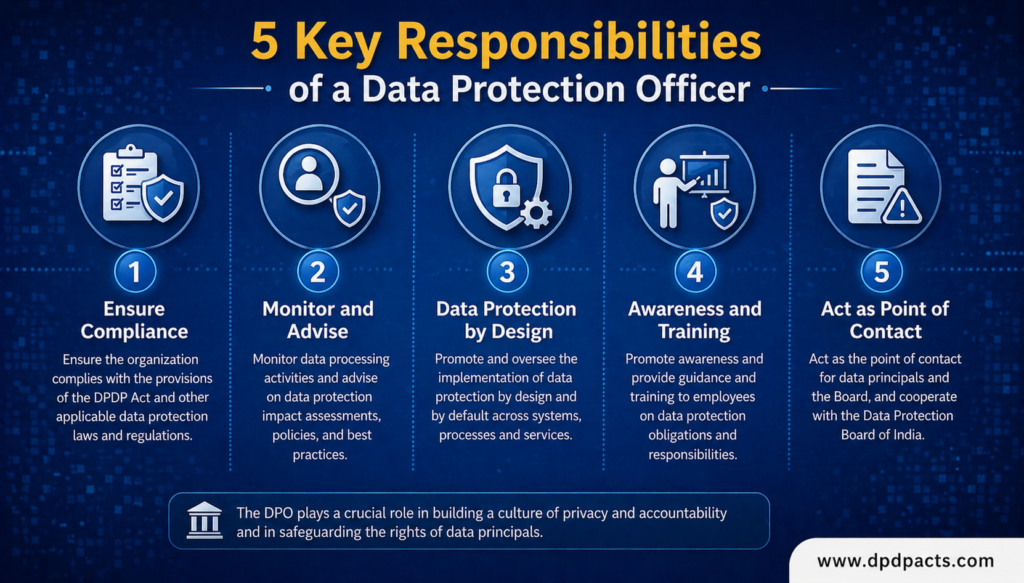
5 Key Responsibilities of a Data Protection Officer

- Loading...
In today’s data-driven economy, organizations collect, process, and store vast amounts of personal information—from customer details to employee records and behavioral analytics. With increasing concerns about privacy and stringent global regulations like the General Data Protection Regulation (GDPR), the role of a Data Protection Officer (DPO) has become not just relevant, but essential.
Get a callback
A Data Protection Officer acts as the backbone of an organization’s data privacy strategy. They ensure that personal data is handled responsibly, securely, and in compliance with applicable laws. But what does this role actually involve on a day-to-day basis? Let’s explore the five key responsibilities that define an effective DPO.
1. Monitoring Compliance with Data Protection Laws
One of the primary responsibilities of a DPO is to ensure that the organization complies with relevant data protection regulations. This is not a one-time task but an ongoing process that involves continuous monitoring and evaluation.
A DPO reviews internal policies, procedures, and systems to ensure they align with legal requirements. This includes auditing data processing activities, checking how data is collected, stored, and shared, and verifying whether appropriate safeguards are in place.
For example, the DPO may assess whether consent mechanisms are valid, whether data retention policies are being followed, or whether third-party vendors comply with contractual data protection obligations. Regular compliance checks help organizations identify gaps early and avoid costly penalties.
2. Informing and Advising the Organization
A DPO is not just a watchdog—they are also an advisor. They play a critical role in educating the organization about its responsibilities under data protection laws.
This involves providing clear, practical guidance to management, employees, and stakeholders on how to handle personal data responsibly. The DPO ensures that everyone—from IT teams to HR departments—understands the legal implications of their actions.
For instance, when a company launches a new product or service that involves personal data, the DPO advises on privacy-by-design principles. They help integrate data protection measures from the outset, rather than as an afterthought.
By acting as a subject matter expert, the DPO helps build a culture of accountability and awareness across the organization.
3. Managing Data Protection Impact Assessments (DPIAs)
A Data Protection Impact Assessment (DPIA) is a process used to identify and minimize risks associated with data processing activities, especially those involving sensitive or large-scale data.
The DPO plays a central role in determining when a DPIA is required and guiding the organization through the process. They provide recommendations on how to conduct the assessment, what risks to look for, and how to mitigate them effectively.
For example, if a company plans to implement a new system that uses artificial intelligence to analyze customer behavior, the DPO would assess whether this poses risks to individual privacy. If so, they ensure that a DPIA is conducted and that appropriate safeguards—such as data minimization or anonymization—are implemented.
Importantly, while the DPO advises on DPIAs, the responsibility for conducting them ultimately lies with the organization.
4. Acting as the Contact Point for Authorities
Another crucial responsibility of the DPO is to serve as the primary liaison between the organization and regulatory authorities.
In the event of an investigation, audit, or complaint, the DPO communicates directly with the supervisory authority. They provide necessary documentation, respond to queries, and ensure transparency throughout the process.
This role requires a deep understanding of legal frameworks and the ability to navigate complex regulatory environments. The DPO must be able to explain the organization’s data practices clearly and demonstrate compliance.
Additionally, the DPO may also act as a point of contact for individuals (data subjects) who have questions or concerns about how their data is being used. This includes handling requests such as data access, rectification, or deletion.
5. Training Staff and Promoting Awareness
Even the best policies and systems can fail if employees are not aware of them. That’s why training and awareness are key responsibilities of a DPO.
The DPO develops and delivers training programs tailored to different roles within the organization. For example, employees in marketing may need guidance on consent and data usage, while IT staff may require training on security measures and breach response.
Regular workshops, e-learning modules, and awareness campaigns help reinforce good practices and keep data protection top of mind.
Beyond formal training, the DPO also fosters a culture where privacy is valued. This includes encouraging employees to report potential issues, ask questions, and take ownership of data protection in their daily work.
Why the Role of a DPO Matters
The responsibilities of a Data Protection Officer go beyond compliance—they are about building trust. In an era where data breaches and privacy violations can damage reputations overnight, having a dedicated expert ensures that organizations handle data ethically and responsibly.
A strong DPO not only reduces legal risks but also enhances customer confidence. When people know their data is in safe hands, they are more likely to engage with a business.
Final Thoughts
The role of a Data Protection Officer is both strategic and operational. From ensuring compliance to fostering awareness, the DPO plays a critical role in safeguarding personal data and maintaining trust.
As data privacy continues to evolve, organizations that invest in strong data protection leadership will be better positioned to navigate challenges, avoid risks, and build lasting relationships with their customers.
Frequently Asked Questions (FAQs)
Q1. What qualifications are required to become a DPO?
A1. A DPO typically needs expertise in data protection laws, IT systems, and risk management. While there is no fixed qualification, certifications in data privacy (like CIPP/E or CIPM) are highly valued.
Q2. Is appointing a DPO mandatory for all organizations?
A2. No, it is mandatory only for certain organizations—such as public authorities or those that process large-scale sensitive data or monitor individuals systematically.
Q3. Can a DPO be an internal employee?
A3. Yes, a DPO can be an internal employee or an external consultant, as long as they can perform their duties independently and without conflict of interest.
Q4. What is the difference between a DPO and a compliance officer?
A4. A compliance officer focuses broadly on regulatory compliance, while a DPO specializes specifically in data protection and privacy laws.
Q5. Does a DPO need technical knowledge?
A5. Yes, while not necessarily a technical expert, a DPO should understand IT systems, cybersecurity basics, and data processing technologies.
Q6. What happens if an organization fails to comply with data protection laws?
A6. Non-compliance can result in heavy fines, legal actions, and reputational damage. In some cases, penalties can reach millions of euros under regulations like GDPR.
Q7. How does a DPO handle a data breach?
A7. The DPO coordinates the response, assesses the impact, ensures timely reporting to authorities, and helps mitigate risks to affected individuals.
Q8. Can a DPO be held personally liable for non-compliance?
A8. Generally, the organization is responsible for compliance. However, the DPO must perform their duties diligently and ethically.
Q9. How often should staff receive data protection training?
A9. Training should be ongoing, with regular refreshers—typically annually or whenever there are significant changes in policies or regulations.
Q10. What skills make a successful DPO?
A10. Key skills include legal expertise, communication, analytical thinking, attention to detail, and the ability to influence organizational behavior.