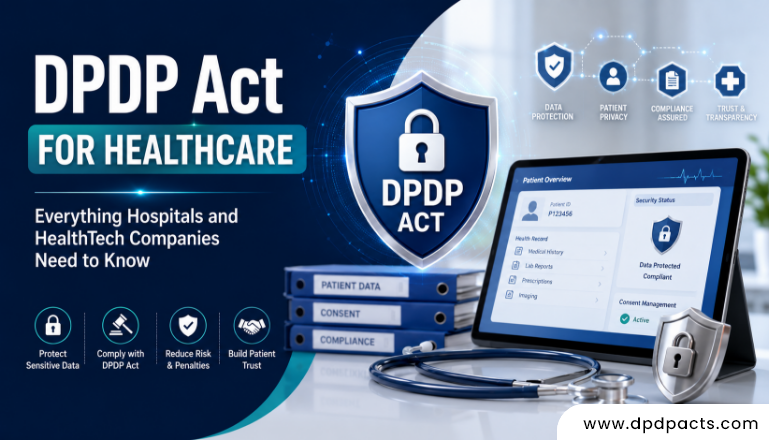
DPDP Act for Healthcare: Everything Hospitals and HealthTech Companies Need to Know

- Loading...
Healthcare is one of the most data-intensive industries in the world. Every patient interaction generates valuable personal information—from registration details and diagnostic reports to prescriptions, insurance records, laboratory results, imaging data, and electronic health records (EHRs).
As India’s healthcare sector rapidly embraces digital transformation through electronic medical records, telemedicine, AI diagnostics, wearable devices, and initiatives like ABDM, protecting patient privacy has become more critical than ever.
Get a callback
The Digital Personal Data Protection (DPDP) Act, 2023 introduces a legal framework governing how organizations collect, process, store, share, and delete digital personal data. For healthcare organizations, compliance is no longer only an ethical responsibility—it is becoming a core governance and operational requirement. Healthcare providers routinely process highly sensitive patient information, making them one of the sectors most affected by the new privacy framework.
This guide explains everything healthcare organizations need to know about DPDP compliance.
Why Healthcare is Highly Impacted by the DPDP Act
Healthcare organizations collect enormous volumes of personal data every day.
Examples include:
- Patient demographics
- Aadhaar or identification documents
- Contact information
- Medical history
- Laboratory reports
- Diagnostic images
- Prescription records
- Insurance information
- Billing details
- Appointment history
- Biometric information
- Mental health records
- Emergency contacts
- Health data collected through wearable devices
A modern hospital may process millions of patient records annually across multiple departments.
Any misuse, unauthorized access, accidental disclosure, or cyberattack could significantly impact patients and expose healthcare providers to legal, financial, and reputational risks. Healthcare organizations are therefore prioritizing stronger privacy governance and cybersecurity ahead of full DPDP implementation.
Who Must Comply?
The DPDP Act applies to almost every organization processing digital personal data.
Healthcare organizations include:
- Multi-specialty hospitals
- Government hospitals
- Private hospitals
- Clinics
- Diagnostic laboratories
- Imaging centers
- IVF centers
- Mental health institutions
- Dental clinics
- Telemedicine providers
- Digital pharmacies
- HealthTech startups
- Electronic Medical Record (EMR) providers
- Hospital Management System vendors
- Healthcare SaaS companies
- Health insurance administrators
- Wellness applications
Even a small clinic maintaining patient records digitally falls within the scope of the Act if it processes digital personal data.
Understanding Patient Data Under DPDP
The DPDP Act protects digital personal data.
In healthcare, this includes:
Identity Information
- Name
- Mobile number
- Address
- Aadhaar
- Passport
Medical Information
- Diagnosis
- Treatment history
- Prescriptions
- Medical reports
- Surgery records
- Radiology images
Financial Information
- Insurance claims
- Payment records
- Billing information
Biometric Information
- Fingerprints
- Facial recognition
- Retina scans
Device Data
- Fitness trackers
- Remote monitoring devices
- Smart medical equipment
Digital Health Records
- Electronic Medical Records
- Electronic Health Records
- Appointment logs
- Telemedicine consultation records
Key Responsibilities of Healthcare Organizations
1. Obtain Valid Consent
Patients should clearly understand:
- What information is collected
- Why it is collected
- How it will be used
- Who will receive it
- How long it will be retained
- How consent can be withdrawn
Consent should be free, informed, specific, unconditional, and communicated through clear notices before processing personal data, unless another lawful basis under the Act applies.
2. Collect Only Necessary Information
Hospitals should avoid collecting unnecessary personal information.
Instead of collecting “everything,” organizations should collect only information necessary for delivering healthcare services.
Examples:
✓ Patient Name
✓ Contact Number
✓ Medical History
✓ Insurance Details (if required)
Avoid unnecessary marketing information unrelated to treatment.
3. Secure Patient Records
Healthcare organizations should implement:
- Encryption
- Access controls
- Multi-factor authentication
- Audit logs
- Secure APIs
- Data backup
- Disaster recovery
- Endpoint security
- Vendor security reviews
Cybersecurity has become one of the biggest pillars of DPDP compliance.
4. Maintain Transparency
Hospitals should publish a privacy notice explaining:
- Data collection purposes
- Patient rights
- Contact details
- Grievance mechanism
- Consent withdrawal process
Patients should never be uncertain about how their data is used.
5. Respect Patient Rights
Patients (Data Principals) generally have rights to:
- Know how their data is processed
- Access information about processing
- Correct inaccurate information
- Request erasure where applicable
- Withdraw consent
- Lodge grievances
- Nominate another person to exercise rights in specified situations under the Act and Rules.
Healthcare providers should establish documented workflows to receive, verify, and respond to such requests.
What About Medical Emergencies?
One common concern is:
Can hospitals process patient data without consent during emergencies?
The DPDP framework recognizes certain legitimate uses, including medical emergencies, allowing necessary processing to protect life or health. Once the emergency has passed, routine privacy obligations continue to apply for subsequent processing activities.
Third-Party Vendors Also Matter
Hospitals rarely work alone.
Patient information often flows through:
- Diagnostic labs
- Cloud providers
- Payment gateways
- Insurance companies
- Telemedicine platforms
- EMR vendors
- SMS providers
- WhatsApp integrations
- Appointment booking systems
Healthcare organizations remain responsible for governing how personal data is shared and protected across their ecosystem, making vendor due diligence and contractual safeguards essential.
Common Compliance Challenges
Many hospitals still struggle with:
Legacy Hospital Information Systems
Older software often lacks:
- Audit trails
- Consent tracking
- Encryption
- Access controls
Paper + Digital Records
Many hospitals use hybrid systems.
Managing privacy across both environments becomes difficult.
Multiple Departments
Patient information flows between:
- Reception
- Laboratory
- Pharmacy
- ICU
- Billing
- Radiology
- Insurance
Maintaining consistent governance across departments is challenging.
Staff Awareness
Doctors, nurses, technicians, receptionists, and administrative staff all require ongoing privacy training.
How Hospitals Can Build a DPDP Compliance Program
A practical roadmap includes:
Step 1
Identify all personal data collected.
Step 2
Create a data inventory.
Step 3
Map data flows.
Step 4
Review consent mechanisms.
Step 5
Update privacy notices.
Step 6
Implement role-based access.
Step 7
Encrypt sensitive information.
Step 8
Review vendor agreements.
Step 9
Train employees.
Step 10
Create an incident response plan.
Technology That Helps
Modern healthcare organizations increasingly deploy:
- Consent Management Platforms
- Privacy Management Software
- Data Discovery Tools
- Data Classification
- Data Mapping
- Consent Lifecycle Management
- Privacy Dashboards
- Data Subject Request Portals
- API-based consent verification
- Security Information and Event Management (SIEM)
Automation significantly reduces compliance risks while improving operational efficiency.
Benefits Beyond Compliance
DPDP compliance offers strategic advantages:
Increased Patient Trust
Patients are more willing to share information when privacy is respected.
Better Cybersecurity
Improved controls reduce breach risk.
Faster Audits
Well-organized records simplify compliance reviews.
Stronger Brand Reputation
Privacy becomes a competitive differentiator.
Improved Operational Efficiency
Structured data governance streamlines workflows.
Common Mistakes Healthcare Organizations Should Avoid
- Assuming consent obtained for treatment automatically covers every secondary use of patient data.
- Collecting more data than necessary.
- Not documenting consent.
- Sharing patient records without appropriate safeguards.
- Ignoring third-party vendor risks.
- Failing to train employees.
- Using outdated software without security updates.
- Not having a breach response process.
- Missing data retention and deletion reviews.
- Treating privacy as only an IT responsibility.
Frequently Asked Questions
Does the DPDP Act apply to small clinics?
Yes. Any organization processing digital personal data may be subject to the Act, regardless of size.
Does the Act apply to telemedicine platforms?
Yes. Telemedicine providers process digital personal data and must comply with applicable obligations.
Can hospitals share patient information with insurance companies?
Only where there is an appropriate legal basis and adequate safeguards, with transparency to patients where required.
Are electronic medical records covered?
Yes. EMRs contain digital personal data and fall within the Act’s scope.
Can patients withdraw consent?
Where processing is based on consent, the Act provides mechanisms for withdrawal, subject to legal and operational considerations.
Final Thoughts
The DPDP Act marks a significant shift in how healthcare organizations manage patient information. Privacy is no longer just a compliance checkbox—it is a foundation for patient trust, clinical excellence, and resilient digital healthcare.
Hospitals, clinics, diagnostic centres, and HealthTech companies that invest early in consent management, data governance, cybersecurity, staff training, and transparent privacy practices will be better positioned to meet regulatory expectations while strengthening patient confidence. As India’s digital health ecosystem expands, embedding privacy by design into every stage of the patient journey will be essential for sustainable growth.